
July 2025 Ah, what a week we’ve had!
Landing in beautiful Seattle and presenting at the prestigious Work, Health, and Stress conference at the University of Washington was an incredible experience.
We shared our research on recovery and return to work following a common mental health condition. We were very proud to be the only Aussies in the room — and I think we should all feel proud of the work we’re doing to advance worker mental health in Australia, A heartfelt thank you to my wonderful supervisors, Professor Nicola Hancock, Associate Professor Lynda Matthews and Associate Professor Justin Scanlan and to my colleague from OMHS, Melicia Weitsz. Your guidance and belief in this work has been unwavering and invaluable. FIONA GREEN
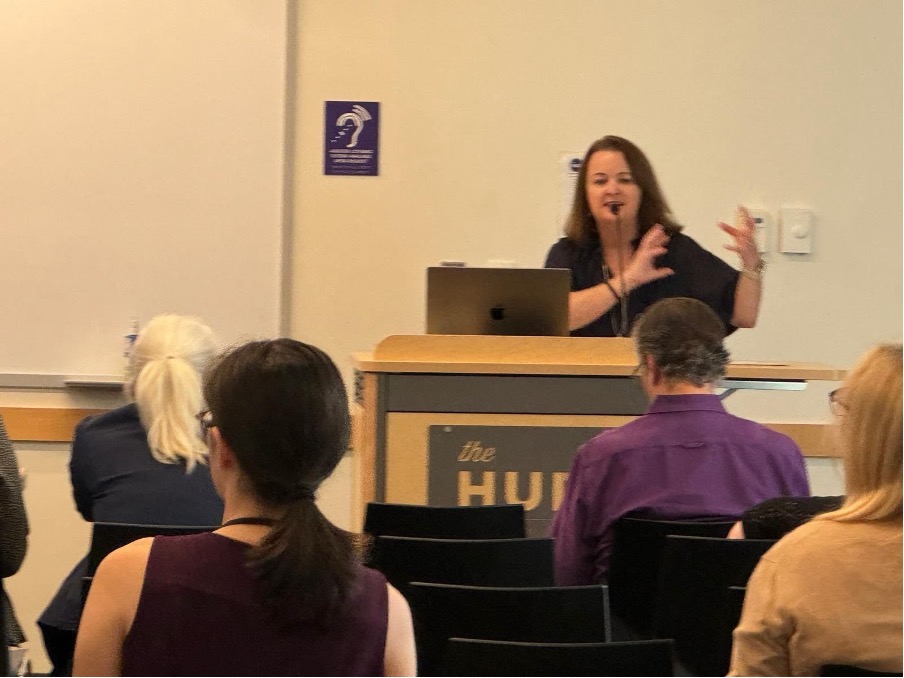
(Fiona Green Seattle, USA, SOHP Work, Stress and Health Conference, July 2025)
Reference from Monica Garcia, UK – August 2025
“Really pleased to see this discussion about vocational recovery and return-to-work. My scoping review drew on international studies, and it’s encouraging to hear how these findings connect with practice in the UK.
I’m also in the process of submitting new work from a qualitative study with Australians returning to work after an income protection claim, and I look forward to sharing more insights soon.
Monica Garcia. BSc., MSc. Health Psych. Consultant
I recently had pleasure of discussing with Fiona Green her new study on return-to-work experiences for people with common mental disorders within disability-based insurance systems. The research uses the CHIME framework (Connectedness, Hope, Identity, Meaning and Empowerment), to understand what drives vocational recovery.
The findings are very insightful:
– Supportive relationships and supervisor behaviours are critical.
– Addressing stigma and workplace culture enables recovery.
– Rebuilding identity and finding meaning in work supports sustained outcomes. From my experience, here is where Early Intervention makes a difference, before shifts occur in occupational identity.
– Empowerment through gradual RTW and job crafting restores confidence.
It’s important to remember most sickness absence is related to common health conditions, including anxiety, depression and stress-related disorders. You’ve probably seen news and ONS figures specifically mentioning mental health.
From my work with UK insurers, I see that Income Protection propositions that offer tailored
#vocationalrehabilitation support, helping individuals address psychosocial barriers, engaging stakeholders, signposting to resources, and providing tools for self-management often lead to sustained return-to-work outcomes, for those customers requiring additional support.
A further enabler is clear communication about income protection policy features for graduated return-to-work(e.g. proportional benefit payments). This reassures customers that they don’t need to be 100% fit to return, reducing pressure and building confidence throughout the return-to-work journey.
For insurers, this is an opportunity to create customer journeys that are evidence-based, recovery-oriented, and designed to truly support customers going through a difficult time.”